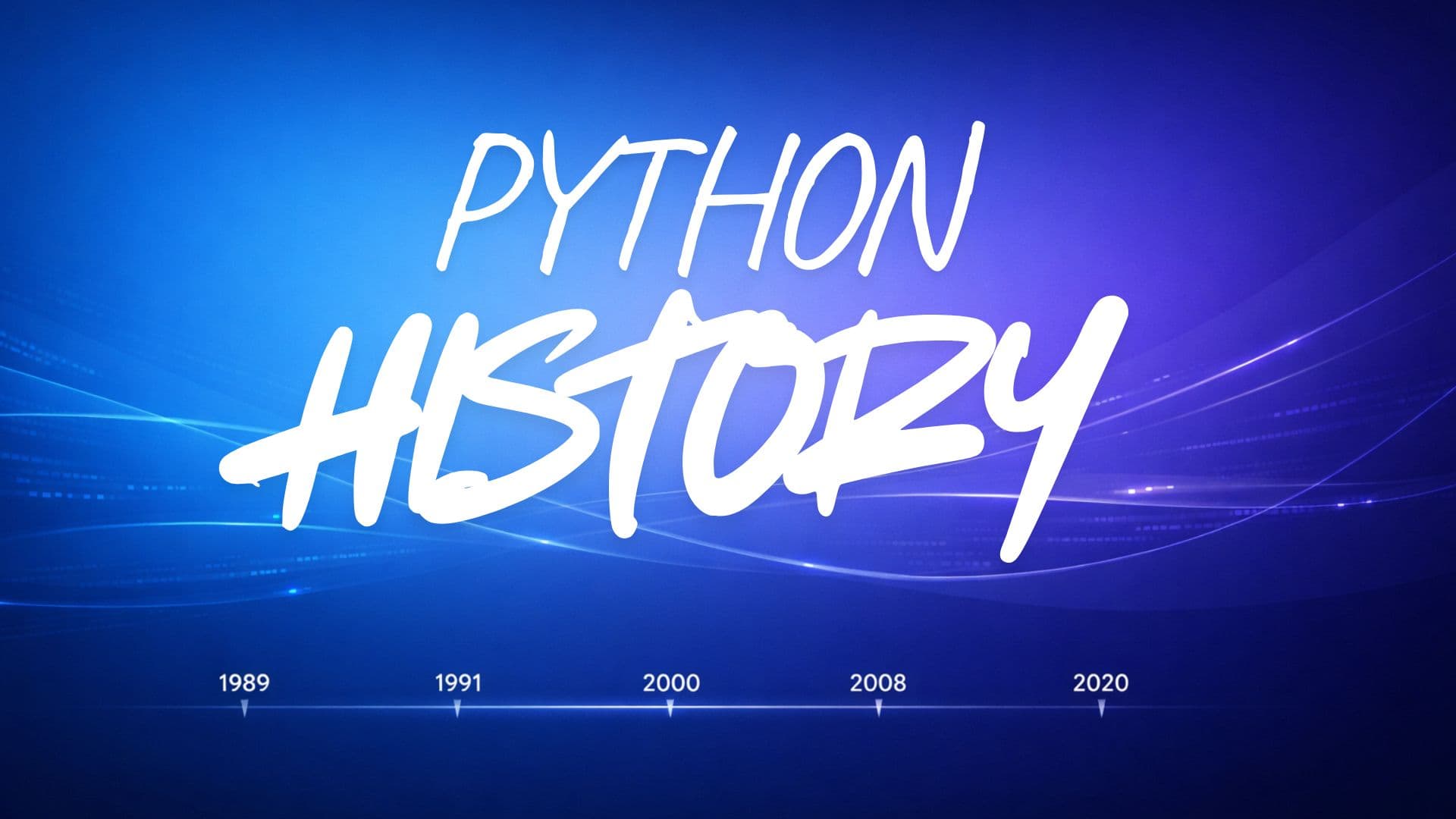
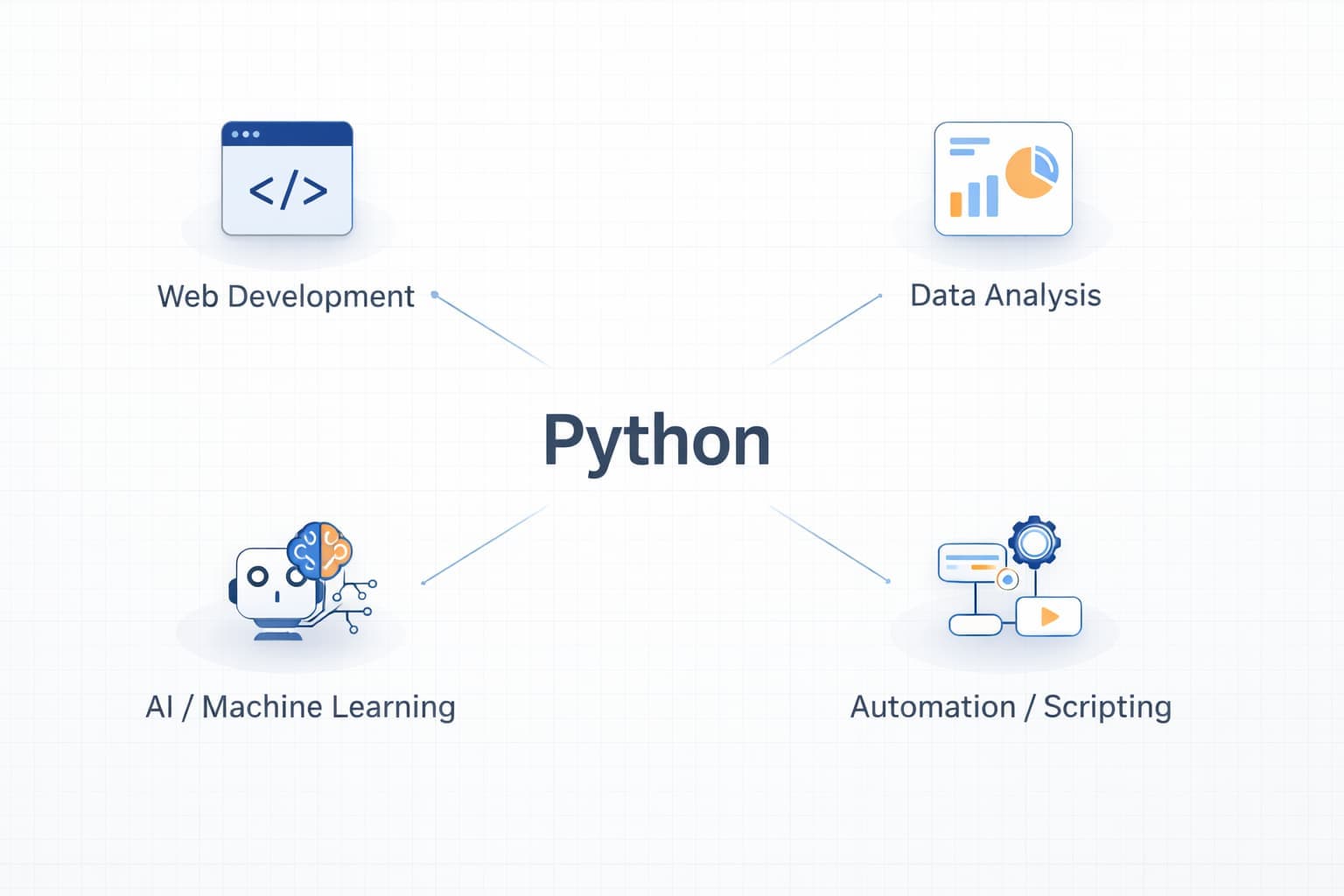
Python is one of the most popular programming languages today — loved for its readability, beginner-friendly syntax, and power across web development, data, AI, and automation. This article covers Python’s origin story, key milestones, and why it keeps evolving.
Beginner-friendly
Simple syntax, readable code, fast learning curve.
Readability first
“Readability counts.” is a core philosophy.
Strong timeline
1989 start → 1991 release → Python 3 era.
Community-driven
PEPs + PSF governance keep Python stable.
What is Python?
Python is a programming language used to tell computers what to do. It became popular because it’s easy to read, easy to write, and useful for real-world projects — from websites to data analysis and AI.
Why Python was created
In the late 1980s, Guido van Rossum started working on Python at CWI (Netherlands). Python was influenced by ABC, but Guido aimed for something simpler, cleaner, and more practical for real work — not just classroom examples.
Design goal
A language that is simple to learn, clear to read, and practical to use.
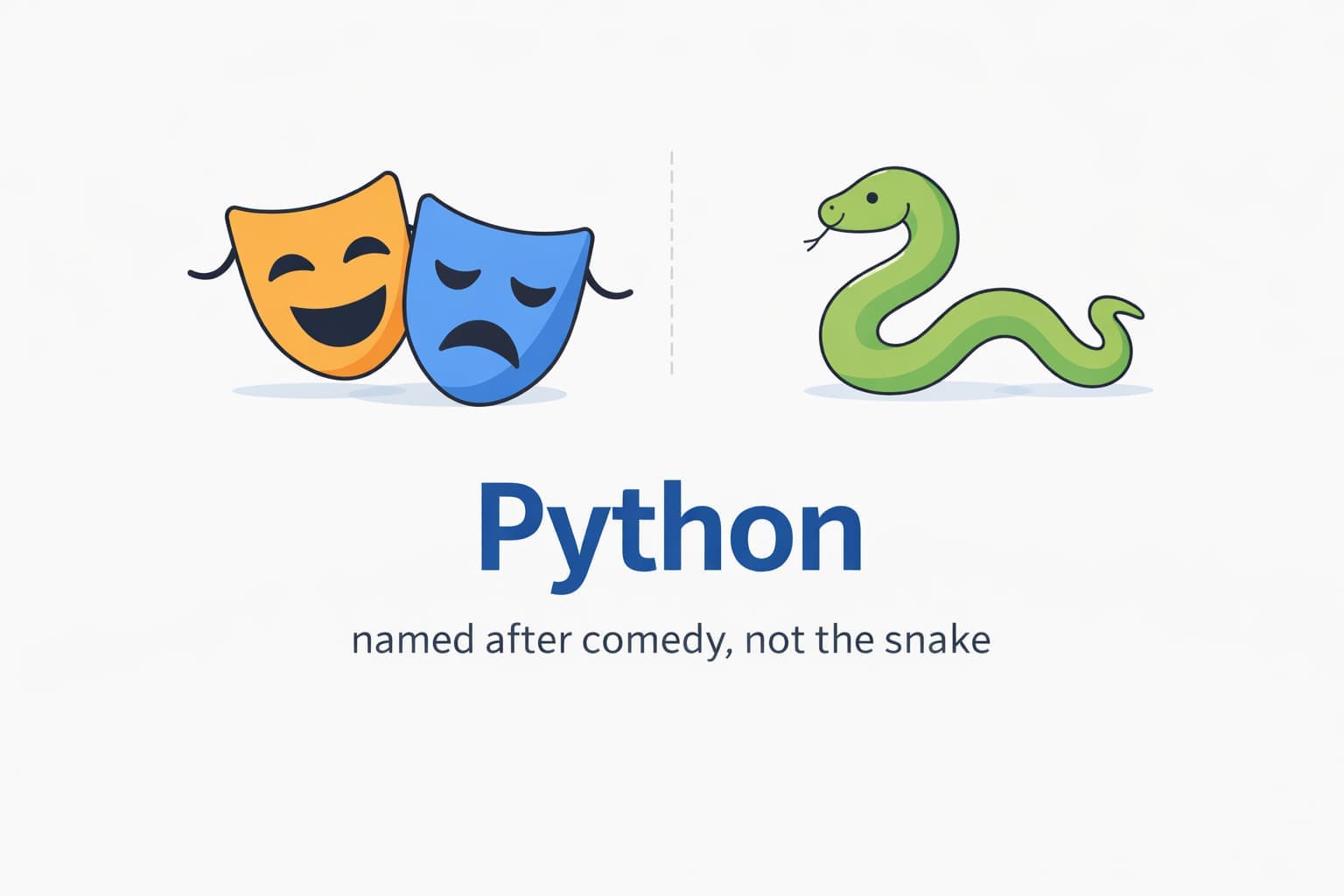
Why it is called “Python”
Python wasn’t named after the snake. It was inspired by the comedy show “Monty Python’s Flying Circus” — Guido wanted a short, unique, slightly mysterious name.
The main idea: “Readability counts”
Python emphasizes readability. One famous line from “The Zen of Python” is: Readability counts.This philosophy shows up in Python’s syntax — including its use of indentation for code blocks.
Indentation example
# Python uses indentation to define blocks
if user_is_ready:
    print("Let's go!")
else:
print("Take your time.")Timeline: Big events in Python history
Dec 1989
Development begins
Guido starts building Python.
1991
First public release (0.9.0)
Core features like modules, exceptions, and basic data types exist early.
Jan 1994
Python 1.0
Adds functional tools like lambda, map/filter/reduce.
Oct 16, 2000
Python 2.0
Major improvements including list comprehensions.
2001
Python Software Foundation
PSF formed to support and protect Python and its community.
Dec 3, 2008
Python 3.0
Modernization release; not fully compatible with older Python 2 code.
2018–2019
Governance change
Move toward a Steering Council model.
Jan 1, 2020
Python 2 End-of-Life
Python 2 is officially sunset and no longer receives fixes.
How Python grows: PEPs (Python Enhancement Proposals)
Python evolves through PEPs — documents that propose new features and record design decisions. This process helps Python stay consistent even with many contributors worldwide.
Why Python is good for beginners
- Readable syntax (less symbols, more clarity)
- Huge community and learning resources
- Fast to build small projects (automation, scripts, simple apps)
- Indentation encourages clean formatting
Beginner learning path
Step 1
Print & basic math
Get comfortable with outputs and simple operations.
Step 2
Variables & data types
Numbers, strings, lists, dictionaries.
Step 3
Conditions
if / else to control logic.
Step 4
Loops
for / while to repeat work efficiently.
Step 5
Functions
Write reusable blocks of code.
Step 6
Mini projects
Calculator, guessing game, file organizer.
References
- Python FAQ (naming origin)
- What’s New in Python 2.0
- What’s New in Python 3.0
- PSF mission
- PEP 1, PEP 13, PEP 20
- Sunsetting Python 2