FastAPI is a modern Python framework for building APIs. People like it because it is fast, easy to use, and it creates interactive API docs automatically. In this post, we will look at how FastAPI started, what it is built on, and why it became a popular choice for many teams.
High performance
ASGI-first and works well with async workloads.
Type hints drive everything
Typing helps with validation, schemas, and docs.
Automatic API docs
Swagger UI at /docs and ReDoc at /redoc.
Clean “production” patterns
Dependencies, auth patterns, background tasks, etc.
Before FastAPI: common API problems
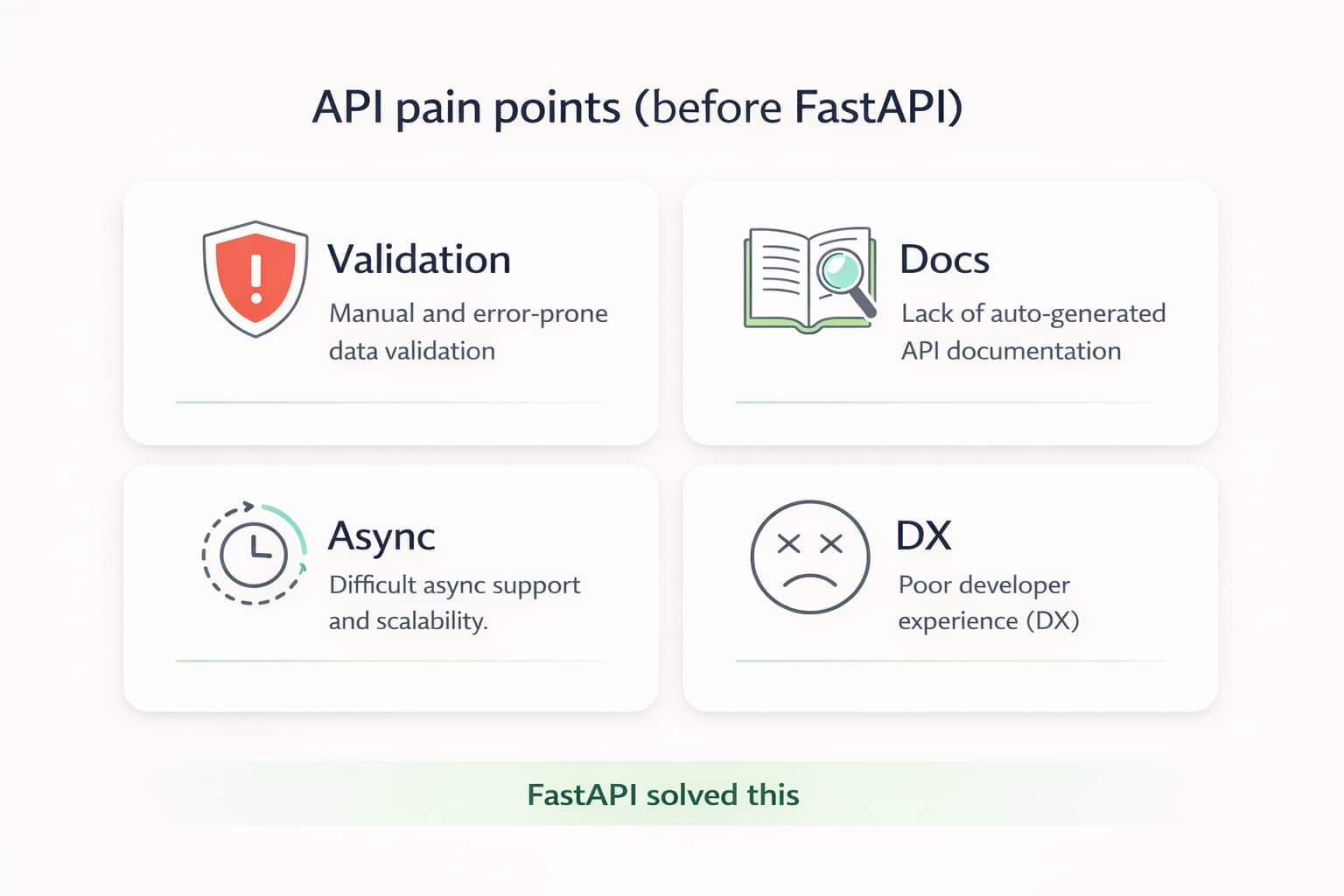
Before FastAPI, many Python APIs were built with Flask or Django/DRF. These tools are great, but teams often needed extra work to get modern API features.
Over time, it became more important to have data validation, predictable schemas, automatic docs, and async readiness. FastAPI focused on these ideas from the start.
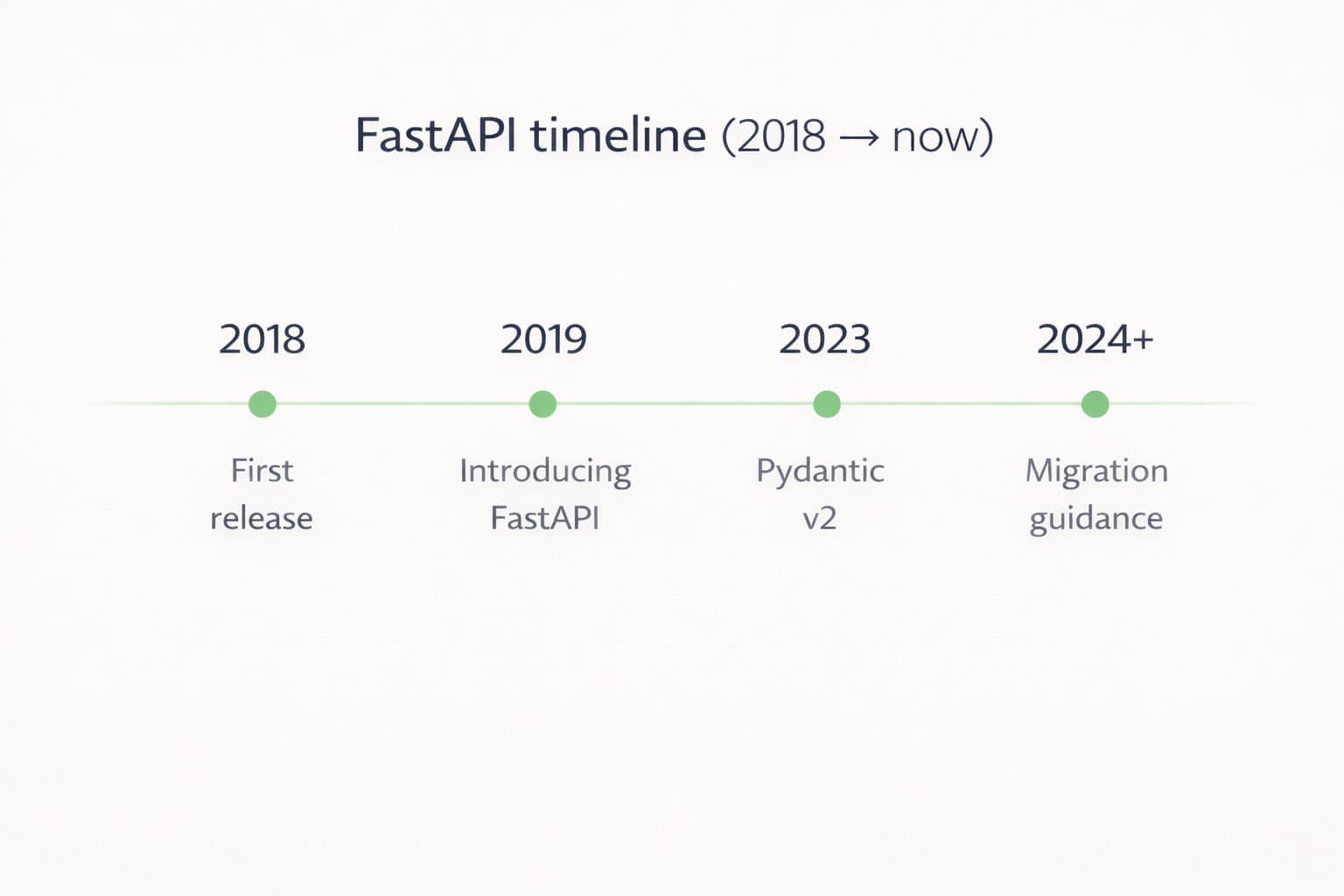
Origin story: 2018 release → 2019 introduction
FastAPI was created by Sebastián Ramírez (also known as tiangolo). The project became public in late 2018, and in early 2019 he published “Introducing FastAPI” to explain the motivation and design of the framework. You can also see the project history in the official GitHub repository.
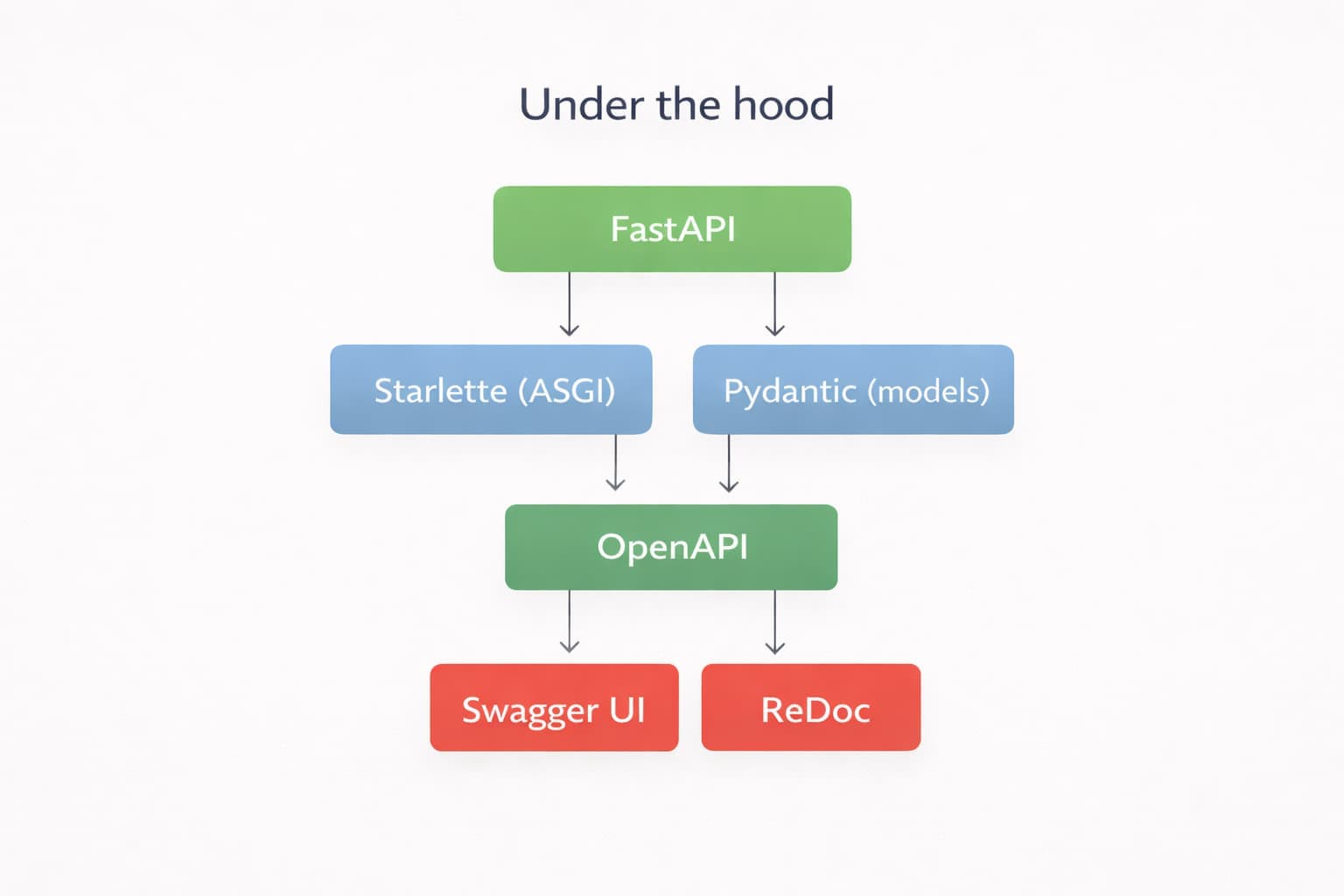
Core ideas: why it feels simple but powerful
FastAPI stands out because of these core ideas:
- It uses Python type hints to drive request/response models.
- It is built on Starlette (ASGI) and Pydantic (validation).
- It generates OpenAPI docs automatically.
Code: Hello World FastAPI
from fastapi import FastAPI

app = FastAPI()

@app.get("/hello")
def hello():
    return {"message": "Hello, FastAPI!"}
Run it locally:
uvicorn main:app --reloadWhy adoption grew so fast
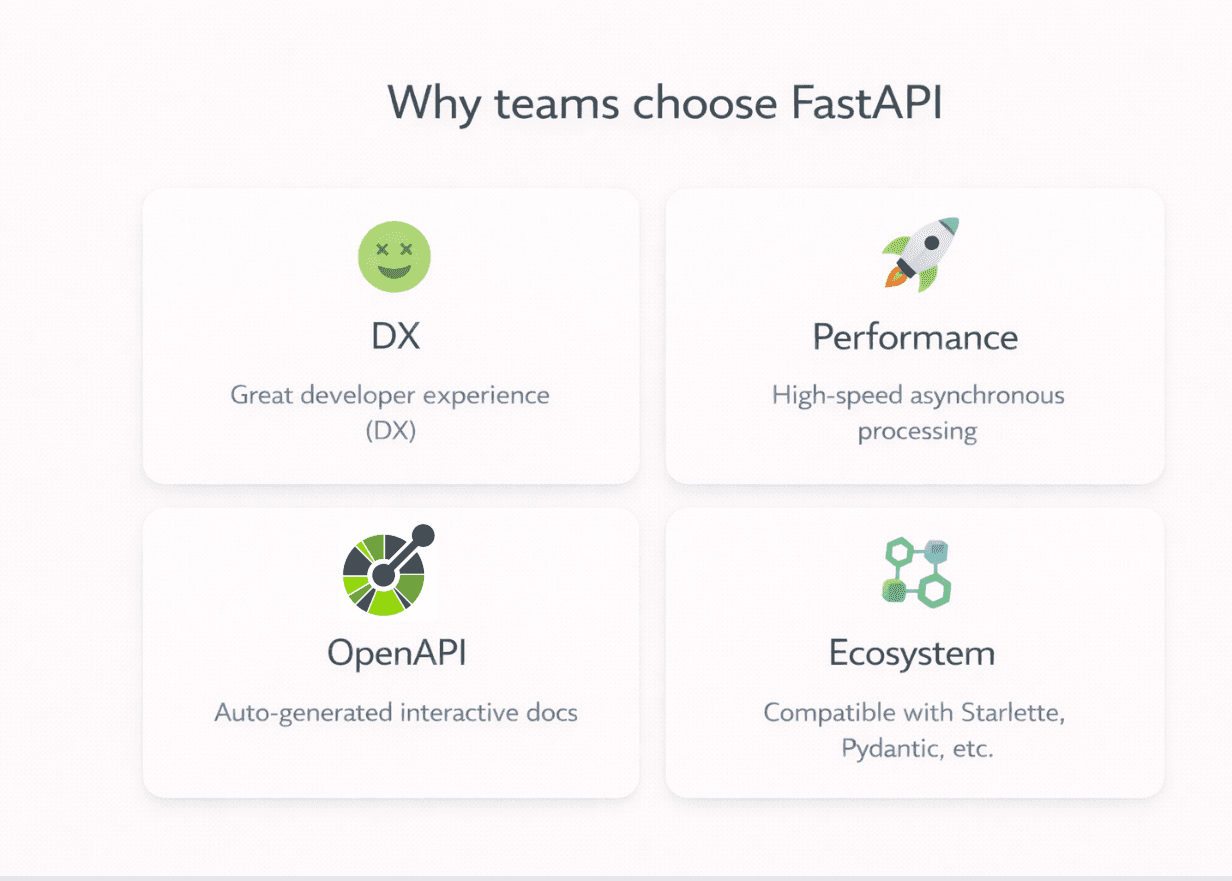
FastAPI improved developer experience. With typing and models, you get better autocomplete and clearer errors. It also helped teams because the interactive docs make it easy for frontend, mobile, and QA to test endpoints.
Code: Request body validation (Pydantic model)
from fastapi import FastAPI
from pydantic import BaseModel

app = FastAPI()

class Item(BaseModel):
    name: str
    price: float
    in_stock: bool = True

@app.post("/items")
def create_item(item: Item):
return {"saved": item}Patterns that feel “production-ready”
FastAPI supports patterns that teams use in real projects. One popular feature is dependency injection. It helps you reuse logic for auth, database sessions, configuration, and more.
Code: Dependency injection (simple API key guard)
from fastapi import FastAPI, Depends, HTTPException, Header

app = FastAPI()

def require_api_key(x_api_key: str | None = Header(default=None)):
    if x_api_key != "demo-key":
        raise HTTPException(status_code=401, detail="Invalid API key")
    return x_api_key

@app.get("/secure", dependencies=[Depends(require_api_key)])
def secure_endpoint():
    return {"ok": True}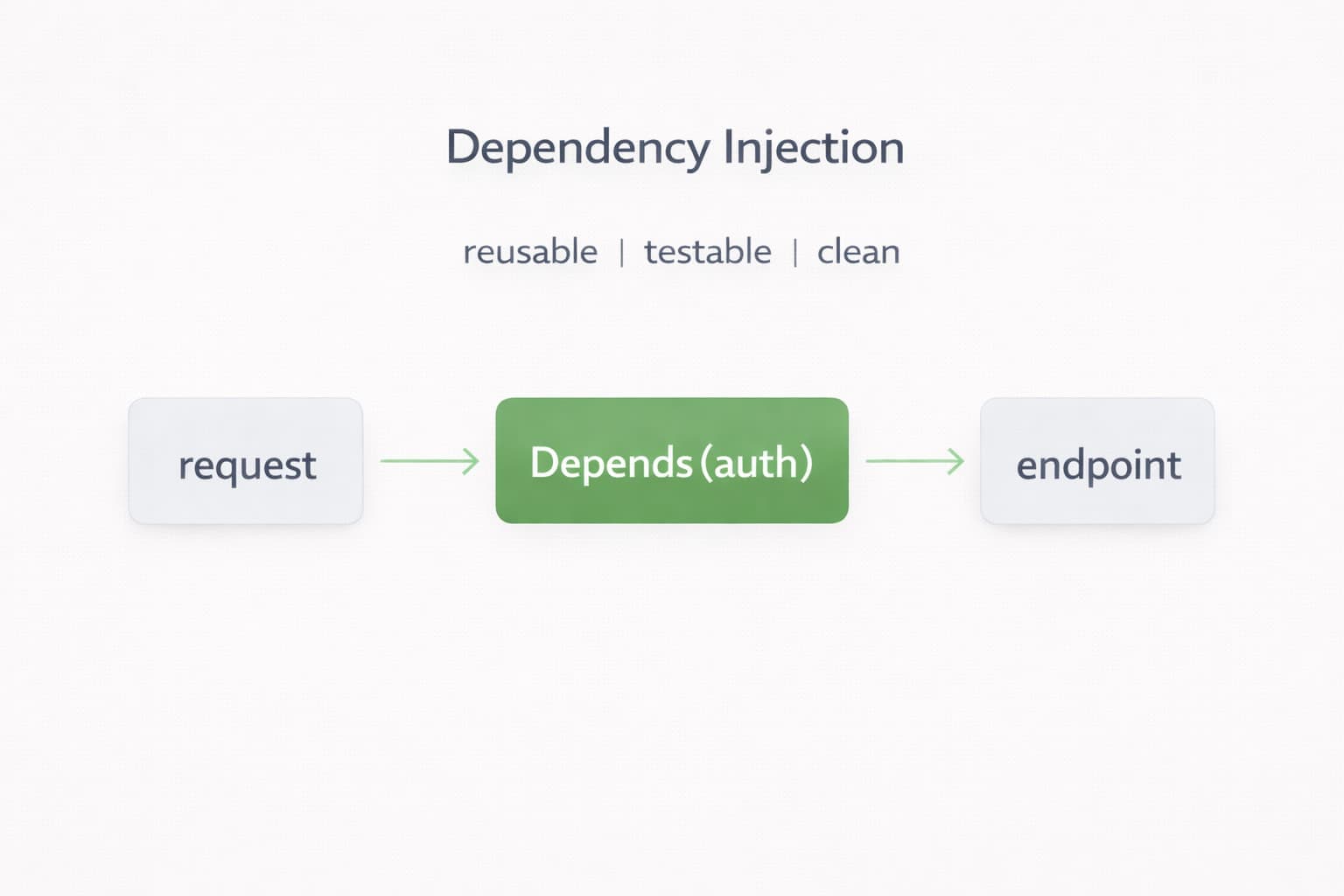
The Pydantic v2 era
FastAPI relies on Pydantic for data models. When Pydantic v2 arrived, many projects needed a safe upgrade path. FastAPI provides a migration guide so teams can upgrade without breaking everything at once.
Code: Concept example (v1 + v2 models in one app)
from fastapi import FastAPI
from pydantic import BaseModel as BaseModelV2
from pydantic.v1 import BaseModel as BaseModelV1

app = FastAPI()

class NewItem(BaseModelV2):
    name: str

class OldItem(BaseModelV1):
    name: str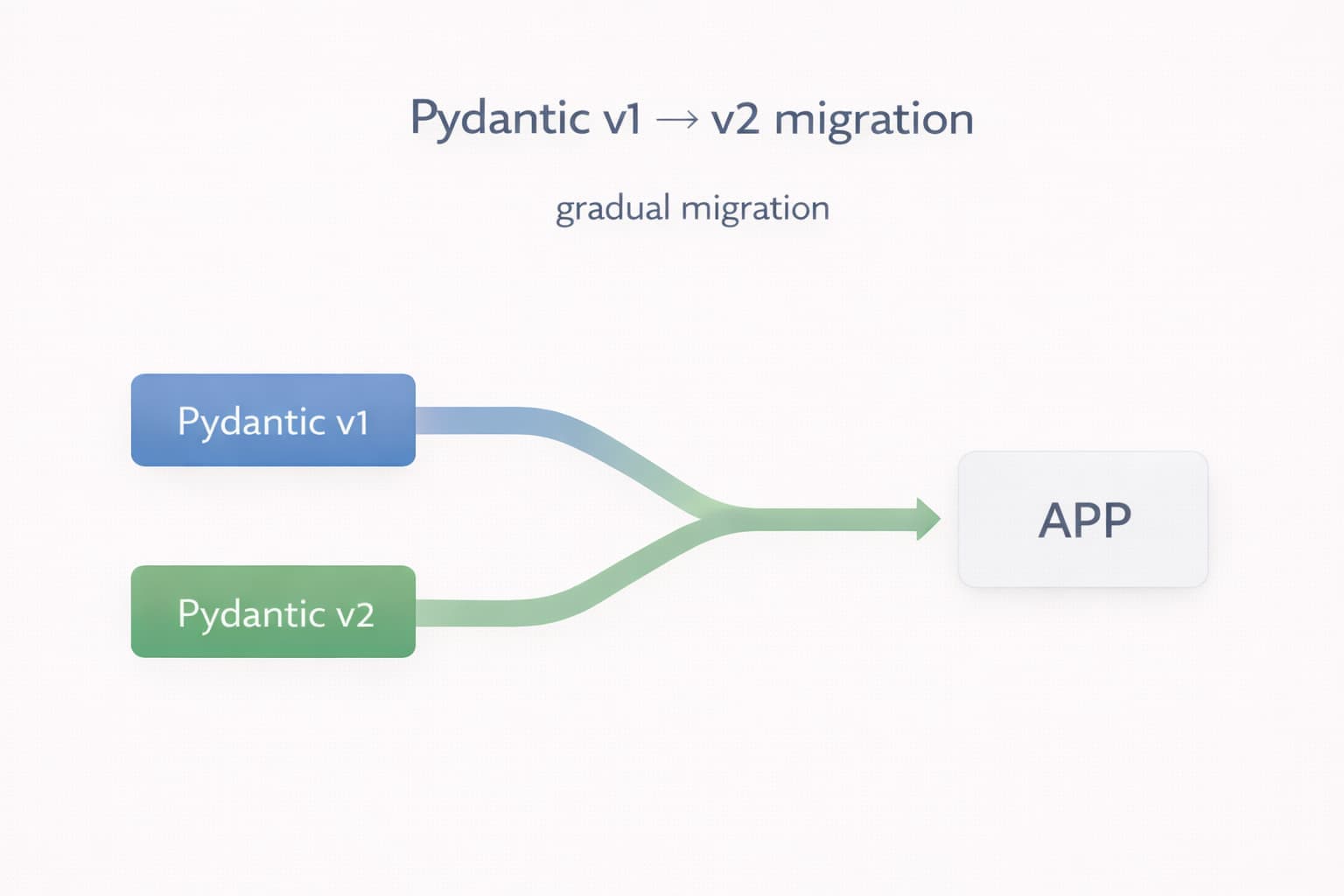
FastAPI today: why it still matters
FastAPI is still a strong choice for many teams because it combines modern typing, an ASGI foundation, and standards-first documentation. If you want clean APIs with a good developer experience, FastAPI is a safe pick.
Key takeaways
- FastAPI made typing and OpenAPI the default, not an extra step.
- It uses Starlette and Pydantic for a solid foundation.
- The interactive docs help teams collaborate faster.